
General education only; not a substitute for examination or diagnosis.
What swallowing disorders are
Swallowing is a process in which many muscles and nerves work together to prepare food in the mouth, pass it into the throat and carry it down the oesophagus to the stomach. A disturbance of this process is called dysphagia. There are two main groups, depending on where the problem arises:
- Oropharyngeal dysphagia: difficulty moving food from the mouth into the throat. Main causes include neurological diseases such as stroke, Parkinson's disease, ALS, multiple sclerosis and myasthenia gravis, head and neck cancer and its treatment, Zenker diverticulum and dysfunction of the cricopharyngeus (the muscle at the entrance to the oesophagus).
- Oesophageal dysphagia: a feeling of food sticking behind the breastbone. Causes include reflux-related strictures, eosinophilic oesophagitis, oesophageal rings (such as a Schatzki ring), motility disorders such as achalasia, and oesophageal tumours.
In people who have had radiotherapy to the head and neck, muscle stiffening (fibrosis) and reduced saliva can affect swallowing even years after treatment. Ageing alone does not cause dysphagia, but it increases the risk.
Symptoms
- Coughing or choking while eating or drinking.
- A wet, gurgly voice after swallowing.
- A feeling that food is sticking in the throat or chest.
- Liquids coming out through the nose, spillage from the mouth or drooling.
- Pain on swallowing (odynophagia).
- Food coming back up; in Zenker diverticulum, regurgitation of undigested food eaten hours earlier and bad breath are typical.
- Meals taking longer, avoiding certain foods and weight loss.
- Recurrent chest infections (aspiration pneumonia); in some people aspiration happens silently, without an obvious sign such as coughing.
When to see a doctor
Situations that need emergency care
- Choking, when food blocks the airway, is an emergency: if the person cannot speak, cough or breathe, call emergency services immediately and give first aid (back blows and abdominal thrusts).
- Food stuck in the oesophagus so that even saliva cannot be swallowed; urgent endoscopy may be needed.
- Vomiting blood or passing black, tarry stools.
- Sudden swallowing difficulty with facial droop, slurred speech or weakness in an arm or leg, which may be signs of a stroke.
- Breathlessness after eating, or signs of a chest infection with fever.
Situations that need a planned appointment
- Swallowing difficulty that starts with solids and gets steadily worse; the UK NICE guideline recommends that people with dysphagia are referred on a suspected oesophageal cancer pathway.
- Unexplained weight loss, pain on swallowing, or hoarseness together with swallowing difficulty.
- Recurrent chest infections or frequent coughing at meals.
- Changes in swallowing after head and neck radiotherapy or surgery.
The cause of swallowing difficulty is often treatable, but it should be investigated without delay. A definite diagnosis and treatment decision are made after examination.
How it is diagnosed
Assessment starts with a detailed history: how long the problem has lasted, which textures (solids, liquids) cause it, where food seems to stick, weight loss, medicines and other illnesses.
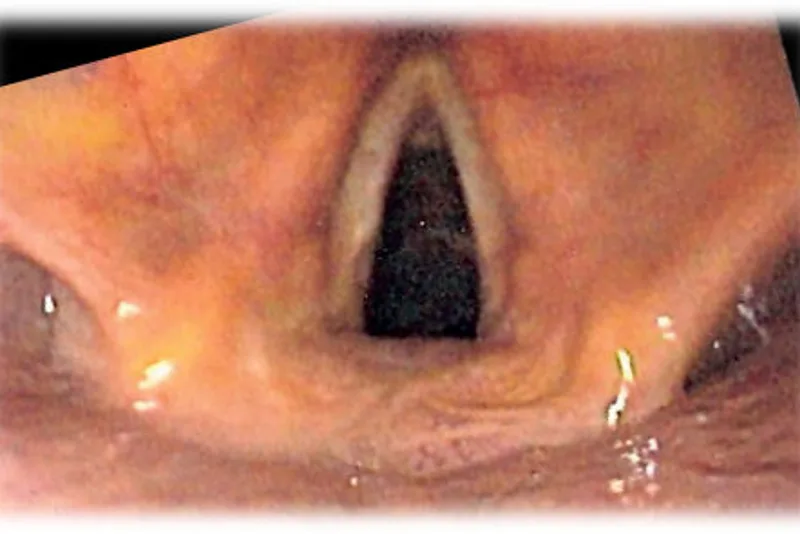
- An ear, nose and throat examination and flexible laryngoscopy assess the throat and larynx.
- Bedside swallow screen: simple tests such as a water swallow test estimate aspiration risk; because they can miss silent aspiration, instrumental tests follow when needed.
- FEES (fibreoptic endoscopic evaluation of swallowing): a thin endoscope passed through the nose shows the throat and larynx while foods of different textures are swallowed; it does not show the oesophageal phase.
- Videofluoroscopic swallowing study (modified barium swallow): the mouth, throat and upper oesophagus are recorded on X-ray while barium-coated foods are swallowed.
- Barium swallow (oesophagram): shows the structure of the oesophagus, strictures and Zenker diverticulum.
- Upper GI endoscopy (gastroscopy): the oesophagus and stomach are examined directly, with biopsy when needed.
- Oesophageal manometry: measures the contractions of the oesophageal muscles and is used to diagnose motility disorders such as achalasia.

Treatment options
Treatment is planned according to the underlying cause, the severity of the problem and the risk of aspiration, and several specialties often work together.
Swallowing therapy and nutrition
- A speech and language therapist teaches exercises that strengthen the swallowing muscles and compensatory manoeuvres, such as tucking the chin, turning the head to one side, effortful swallowing, small mouthfuls and sitting upright.
- Texture modification: the international IDDSI framework defines 8 levels, numbered 0 to 7, for drinks and foods; the right level is chosen based on the swallowing assessment.
- Nutritional support: a dietitian plans calorie and fluid intake; if oral intake is not enough, a temporary nasogastric tube or a gastrostomy tube placed through the abdominal wall may be used.
Medicines
- Acid-suppressing medicines are used for reflux-related problems and specific medicines for eosinophilic oesophagitis; treating an underlying neurological disease can also affect swallowing.
Procedures and surgery
- Endoscopic dilatation: strictures and rings caused by reflux or radiotherapy can be widened with balloons or bougies.
- In cricopharyngeal dysfunction, botulinum toxin injection to relax the muscle or cutting the muscle (cricopharyngeal myotomy) may be considered in selected patients.
- Zenker diverticulum: the wall containing the muscle between the pouch and the oesophagus can be divided through the mouth with a rigid or flexible endoscope, or open surgery through the neck can be used; the method depends on the size of the pouch and the person's general health.
- When a tumour causes swallowing difficulty, treatment is planned according to the type and stage of the tumour.
Before and after surgery
Before endoscopic procedures and surgery, an anaesthetic assessment is carried out and fasting instructions are given. Blood thinners are adjusted only on the advice of the treating physician.
- After endoscopic Zenker treatment or dilatation, the hospital stay is usually short; eating usually starts with liquids and progresses step by step as advised by the team.
- A sore throat for a few days is common and is usually controlled with painkillers.
- Open surgery involves a neck incision and a drain, and the hospital stay may be longer; temporary hoarseness can occur.
- Increasing chest or neck pain, fever, breathlessness, neck swelling or vomiting blood may signal a complication such as a perforation of the oesophagus and need immediate attention.
Follow-up
Follow-up aims to keep swallowing safe, maintain adequate nutrition and prevent chest infections.
- At swallowing therapy reviews, the exercises and texture level are reassessed.
- Weight and nutrition are monitored regularly, and recurrent chest infections are recorded.
- A stricture may recur after dilatation and need repeat treatment; if symptoms return after Zenker treatment, reassessment is needed.
- People who have had head and neck radiotherapy need long-term monitoring for swallowing changes that may develop later.
Frequently asked questions
Sources
The general information on this page is based on the guideline and institutional sources below. Individual diagnosis and treatment decisions require an examination.