
General education only; not a substitute for examination or diagnosis.
What this area covers
The ear has three parts. The outer ear includes the visible ear and the ear canal. The middle ear contains the eardrum, three tiny bones that conduct sound and the Eustachian tube, which connects the middle ear to the back of the nose. The inner ear holds the cochlea, which serves hearing, and the semicircular canals and vestibular organs, which serve balance. Signals from these structures travel to the brain along the hearing and balance nerve.
Hearing loss falls into two main groups. In conductive loss, sound is blocked in the outer or middle ear; examples are impacted wax, fluid in the middle ear, a perforated eardrum or stiffening of the ossicles (otosclerosis). In sensorineural loss the problem lies in the inner ear or the hearing nerve; age-related hearing loss, noise damage and sudden hearing loss belong here. A mixed loss combining both types is also possible.
- Infection of the ear canal (otitis externa) and impacted ear wax.
- Acute middle-ear infection, fluid in the middle ear and chronic middle-ear infection (chronic otitis media).
- Cholesteatoma: skin tissue that collects behind the eardrum and can erode the surrounding bone.
- Sudden sensorineural hearing loss and age- or noise-related hearing loss.
- Ringing or noise in the ears (tinnitus).
- Balance disorders such as benign paroxysmal positional vertigo (BPPV), Ménière's disease and vestibular neuritis.
Symptoms
- Gradual or sudden reduction of hearing in one or both ears, or difficulty following conversation in noisy places.
- A feeling of fullness, pressure or blockage in the ear.
- Ear pain, itching and swelling of the ear canal.
- Ear discharge; long-lasting or foul-smelling discharge may point to chronic infection or cholesteatoma.
- Ringing, buzzing or hissing; one-sided noise or noise that beats in time with the pulse (pulsatile tinnitus) needs particular assessment.
- Dizziness: seconds of spinning triggered by head movement (BPPV), attacks lasting minutes to hours (Ménière's disease) or continuous spinning for days (vestibular neuritis).
- Unsteadiness, nausea and vomiting.
When to see a doctor
Situations that need urgent care
- Sudden hearing loss in one or both ears: sudden sensorineural hearing loss is an emergency and needs ENT assessment without delay, ideally the same day.
- Facial palsy or weakness on one side of the face together with ear symptoms.
- Severe vertigo with double vision, slurred speech, weakness or numbness of an arm or leg, inability to walk or severe headache: stroke must be ruled out, so call emergency services (112) immediately.
- Bloody discharge or clear fluid from the ear after a head injury.
- Swelling and redness behind the ear, high fever, severe headache or neck stiffness together with an ear infection.
Situations for a planned appointment
- Slowly progressive hearing loss or needing the television louder and louder.
- Tinnitus in one ear, tinnitus lasting longer than six months or tinnitus with hearing difficulty.
- Ear pain that does not settle within a few days despite treatment, or recurrent ear discharge.
- Recurrent short attacks of dizziness provoked by head position.
The cause of symptoms differs from person to person. A definite diagnosis and treatment decision can only be made after examination.
How it is diagnosed
- Detailed history: when symptoms began, how long they last, whether one or both ears are involved, how long dizzy spells last and what triggers them, noise exposure, medicines and previous ear disease.
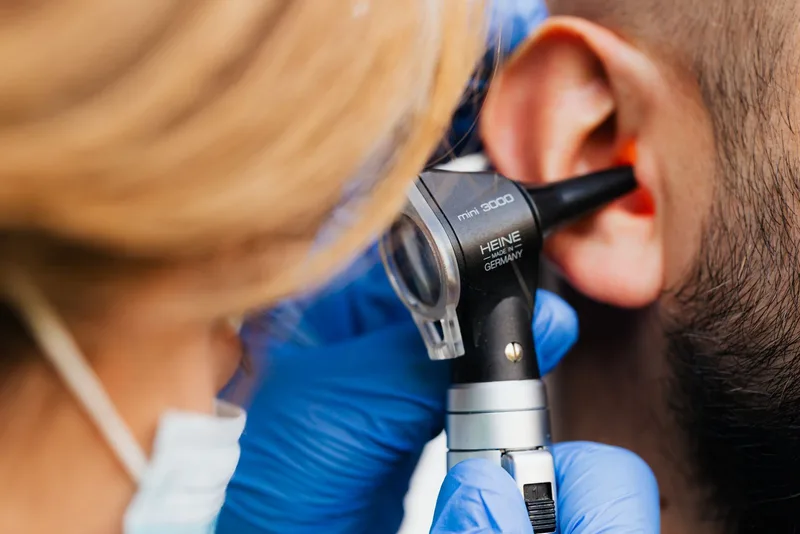
- Examination of the ear canal and eardrum with an otoscope or ear microscope, with microscopic cleaning when needed.
- Tuning-fork tests (Weber and Rinne) for a first distinction between conductive and sensorineural loss; in sudden hearing loss this distinction should be made at the first visit.
- Audiological tests: pure-tone and speech audiometry and tympanometry. The 2019 AAO-HNSF guideline recommends audiometry as soon as possible in sudden hearing loss, within 14 days of symptom onset.
- Positional tests for dizziness: posterior-canal BPPV is diagnosed with the Dix–Hallpike manoeuvre, and a supine roll test checks the lateral canal when that is negative. Advanced vestibular tests such as videonystagmography are added in selected patients.
- Imaging: MRI or an auditory brainstem response (ABR) test to exclude disease of the hearing nerve (retrocochlear pathology, such as vestibular schwannoma) in asymmetric or sudden sensorineural loss, and CT of the temporal bone for chronic otitis and cholesteatoma.
- Avoiding unnecessary tests: guidelines advise against routine head CT and routine blood tests in sudden hearing loss and against routine imaging and vestibular testing in typical BPPV; imaging is also not routine for tinnitus that is not one-sided, not pulsatile and has no neurological signs.
Treatment options
Observation and conservative care
- The mainstay of BPPV treatment is a canalith repositioning manoeuvre (for example the Epley manoeuvre), which moves displaced crystals back into place. Routine movement restrictions after the manoeuvre are not recommended.
- Vestibular rehabilitation exercises can support recovery in people with ongoing imbalance.
- For bothersome, persistent tinnitus, education about the condition, cognitive behavioural therapy and sound therapy are the recommended approaches.
- In Ménière's disease, lifestyle measures such as reducing salt intake may form part of treatment.
Medicines
- Ear drops are the main treatment for otitis externa; oral antibiotics are needed only when infection spreads beyond the ear canal or in specific risk situations.
- In sudden sensorineural hearing loss, corticosteroids may be offered within the first two weeks after symptoms begin. If recovery is incomplete two to six weeks after onset, steroid injection behind the eardrum (intratympanic steroid) is recommended. Hyperbaric oxygen combined with steroids may be considered in selected patients; antivirals and vasodilators are not recommended routinely.
- Vestibular suppressant medicines are not a routine treatment for BPPV.
- For persistent tinnitus, antidepressants, anticonvulsants and anti-anxiety medicines, as well as supplements such as ginkgo biloba, melatonin or zinc, are not recommended routinely.
- In Ménière's disease, options include medicines such as diuretics or betahistine and, when needed, treatments given into the middle ear.
Procedures and surgery
- Ventilation tube: a small tube placed in the eardrum for long-standing middle-ear fluid or recurrent infection.
- Tympanoplasty: repair of a perforated eardrum, with reconstruction of the ossicular chain when needed.
- Mastoidectomy: removal of diseased tissue, particularly cholesteatoma, from the mastoid bone behind the ear.
- Stapes surgery may be considered in selected patients with otosclerosis.
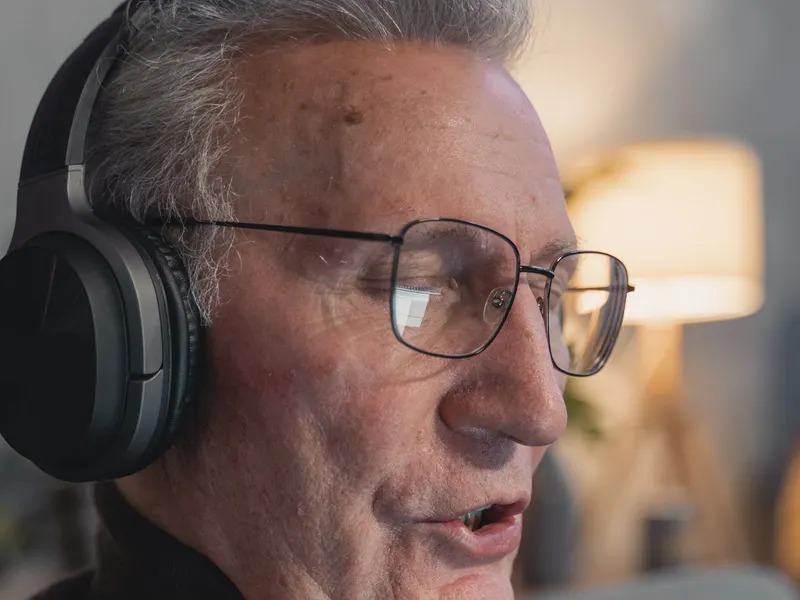
- Hearing aids are the main option for many types of hearing loss. A cochlear implant may be considered for severe sensorineural loss when hearing aids give too little benefit.
Before and after surgery
Before ear surgery, an up-to-date hearing test, a CT scan when needed and an anaesthetic assessment are carried out. Blood thinners and similar medicines should only be stopped or adjusted on the advice of the treating physician.
After surgery there may be packing in the ear, and hearing may feel temporarily reduced. Keeping the ear dry, avoiding forceful nose blowing and sneezing with the mouth open are usually advised. Pain is mostly controlled with painkillers. Recovery time and return to work depend on the type of operation.
- Increasing pain, fever, foul-smelling discharge or heavy bleeding from the ear after surgery should be reported to the doctor.
- Facial weakness, severe dizziness or a marked drop in hearing should prompt an immediate call to the surgical team.
Follow-up
- In sudden hearing loss, follow-up audiometry is recommended at the end of treatment and within six months of completing it.
- In BPPV, patients are reassessed within one month after initial treatment or observation; if symptoms persist, other inner-ear or central nervous system causes are investigated. BPPV can recur.
- After cholesteatoma surgery, long-term ear examination and imaging when needed are required because the disease can recur.
- For people using hearing aids or cochlear implants, device settings and hearing levels are checked at regular intervals.
Frequently asked questions
Sources
The general information on this page is based on the guideline and institutional sources below. Individual diagnosis and treatment decisions require an examination.
- AAO-HNSF Clinical Practice Guideline: Sudden Hearing Loss (Update, 2019)
- AAO-HNSF Clinical Practice Guideline: Benign Paroxysmal Positional Vertigo (Update, 2017)
- AAO-HNSF Clinical Practice Guideline: Tinnitus (2014)
- AAO-HNSF Clinical Practice Guideline: Ménière's Disease (2020)
- NIDCD — Sudden sensorineural hearing loss
- NIDCD — Cochlear implants