
General education only; not a substitute for examination or diagnosis.
What this area covers
The nose is the first part of the airway: it warms, humidifies and filters the air we breathe. Inside the facial bones around the nose are air-filled spaces called the paranasal sinuses, which drain into the nose through narrow channels. When these channels are blocked by swollen lining, polyps or structural narrowing, secretions collect and inflammation, congestion and recurrent symptoms can follow.
This page covers the main conditions affecting breathing, the sinuses and the sense of smell:
- Acute rhinosinusitis: inflammation of the nose and sinuses that usually follows a cold, is mostly viral and settles on its own; bacterial infection develops in only a small proportion of episodes.
- Chronic rhinosinusitis (CRS): persistent inflammation with symptoms lasting 12 weeks or longer; it may occur with nasal polyps (CRSwNP) or without them (CRSsNP).
- Allergic rhinitis: inflammation of the nose triggered by allergens such as pollen, house dust mites or animal dander, causing sneezing, itching, discharge and congestion.
- Septal deviation: a bend in the central wall that divides the nose into two passages (the septum), narrowing airflow on one or both sides.
- Turbinate hypertrophy: persistent enlargement of the ridges on the side wall of the nose (especially the inferior turbinates), blocking the nasal passage.
Symptoms
Symptoms often overlap; duration, whether they are one- or two-sided and any seasonal pattern help to tell the conditions apart.
- Nasal blockage that is constant, intermittent or shifts from side to side, with mouth breathing.
- Clear or thick, coloured discharge from the front of the nose or down the back of the throat (postnasal drip).
- Pain, fullness or pressure in the cheeks, forehead, between or around the eyes.
- Reduced or lost sense of smell (hyposmia/anosmia) and the change in taste that comes with it.
- Bouts of sneezing, itchy nose and eyes and watery eyes; worsening in certain seasons or settings suggests allergic rhinitis.
- Symptoms that have not improved 10 days after a cold, or that improve and then worsen again; this pattern suggests acute bacterial rhinosinusitis.
- Snoring, broken sleep and daytime tiredness; a blocked nose can noticeably affect sleep quality.
According to the 2025 adult sinusitis guideline of the AAO-HNSF (American Academy of Otolaryngology–Head and Neck Surgery Foundation), bacterial sinusitis is considered when thick discharge with blockage and/or facial pain persists without improvement for at least 10 days, or worsens again within 10 days after initial improvement.
When to see a doctor
Situations that need emergency care
Rarely, sinusitis can spread to the eye socket or inside the skull. In these situations go to an emergency department or call 112 (the emergency number in Türkiye):
- Swelling and redness of the eyelids or around the eye, the eye being pushed forward, or pain on moving the eye.
- Reduced vision or double vision.
- Severe headache, neck stiffness, high fever, swelling of the forehead, confusion, or new difficulty with speech or movement.
- A nosebleed that does not stop despite pressure or is very heavy, especially if you take blood thinners.
- Clear, watery fluid dripping from the nose after a head injury or nasal/sinus surgery (this may be a cerebrospinal fluid leak).
Situations that need a planned appointment
- One-sided and progressive nasal blockage, repeated bleeding from the same side, foul-smelling discharge or crusting; these findings need endoscopic examination to exclude a sinonasal tumour, and assessment should not be postponed.
- Nose and sinus symptoms lasting longer than 12 weeks.
- Repeated episodes of sinusitis within a year.
- Loss of smell lasting more than a few weeks.
- Symptoms that persist despite regular allergy medication, or nasal complaints that worsen together with asthma.
This information is for general education. A definite diagnosis and treatment decision can only be made after an examination.
How it is diagnosed
Assessment starts with a detailed history and examination; further tests are requested only when the result would change management.
- History: duration of symptoms, seasonal variation, triggers, asthma, sensitivity to aspirin or painkillers, smoking, previous medicines and any earlier nasal surgery.
- Anterior rhinoscopy: looking inside the front of the nose with a light and speculum.
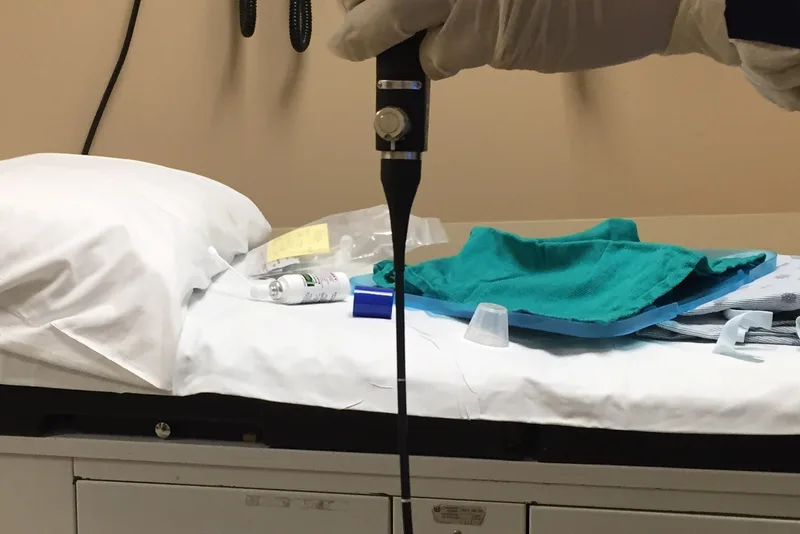
- Nasal endoscopy: examining the nasal cavity and sinus openings with a thin camera (rigid or flexible endoscope), which shows polyps, thick discharge, swelling or a one-sided mass. It is usually done in clinic after a numbing spray.
- Computed tomography (CT): not routinely needed for uncomplicated acute rhinosinusitis. It is requested to confirm chronic disease, when treatment fails, to plan surgery, or when a complication is suspected.
- Magnetic resonance imaging (MRI): used alongside CT when spread to the eye socket or brain, or a tumour, is suspected.
- Allergy testing (skin prick or blood specific IgE): the AAO-HNSF 2015 allergic rhinitis guideline recommends it for patients who do not respond to treatment or when knowing the allergen would guide therapy; routine sinus imaging is not recommended.
- In selected patients, smell testing, culture of the discharge, biopsy and assessment of the immune system.

Treatment options
Watchful waiting and supportive care
- Viral rhinosinusitis does not respond to antibiotics; rest, fluids, painkillers, saline rinses and steroid sprays can ease symptoms.
- The AAO-HNSF 2025 guideline recommends offering watchful waiting without antibiotics as the initial option even for uncomplicated acute bacterial rhinosinusitis, provided follow-up is assured.
Medical treatment
- Intranasal corticosteroid sprays: the recommended mainstay for allergic rhinitis that affects quality of life, and, together with saline rinses, the foundation of treatment for chronic rhinosinusitis. The effect builds over days to weeks of regular use.
- Saline irrigation: clears secretions and crusts.
- Antihistamines: second-generation (less sedating) tablets or antihistamine nasal sprays are particularly helpful for sneezing and itching.
- Antibiotics: used only when bacterial infection is suspected, and for a short course; the AAO-HNSF 2025 guideline lists amoxicillin, with or without clavulanate, as first choice. Routine antibiotics are not recommended for chronic rhinosinusitis without an acute flare.
- Short courses of oral steroids: may be considered in selected patients, for example in a flare of chronic rhinosinusitis with polyps; because of side effects they are not repeated often.
- Allergen immunotherapy (under the tongue or by injection): an option for allergic rhinitis that is not adequately controlled with medication.
- Biologic medicines: may be considered in selected patients with severe chronic rhinosinusitis with polyps whose symptoms persist despite medical and surgical treatment, or for whom surgery is unsuitable; they are not routinely recommended for chronic rhinosinusitis without polyps.
Surgical treatment
- Septoplasty: straightening a deviated septum through the nostrils when it causes blockage; its purpose is to open the airway.
- Turbinate reduction: shrinking enlarged turbinates that have not responded to medication, while preserving their function.
- Endoscopic sinus surgery: performed through the nose with a camera to widen the sinus openings and remove diseased tissue or polyps in chronic rhinosinusitis that persists despite appropriate medical treatment, or in frequently recurring acute sinusitis.
- Surgery may not cure chronic rhinosinusitis permanently; especially in polyp disease, medical treatment usually needs to continue after the operation.
Before and after surgery
- Before surgery you will have an examination, CT, blood tests and an anaesthetic assessment. Blood thinners, aspirin and herbal products are stopped or changed only on the advice of the doctor who manages them.
- General anaesthesia is usually used; you may go home the same day or stay one night, depending on the operation.
- Nasal blockage, light blood-stained discharge and facial fullness are common in the first days; pain is usually controlled with painkillers. If packing or silicone splints were used, you will be told when they will be removed.
- Saline rinses and removal of crusts at follow-up visits are an important part of healing.
- In the first days you will be asked not to blow your nose, to sneeze with your mouth open, and to avoid heavy lifting and strenuous exercise. Return to desk work is often possible within one to two weeks, but this depends on the extent of surgery.
- Seek care immediately for bleeding that does not stop, high fever, swelling around the eye or change in vision, severe headache, or clear watery fluid from the nose.
Follow-up
- In acute sinusitis, if symptoms do not settle in the expected time, or worsen within a few days despite antibiotics, the diagnosis and possible complications should be reassessed.
- Chronic rhinosinusitis is a long-term condition; regular reviews track symptoms, medication use, polyp status and, where needed, endoscopic findings. Associated conditions such as asthma are followed together with the relevant physician.
- The AAO-HNSF 2025 guideline on surgery for chronic rhinosinusitis recommends assessing outcomes between 3 and 12 months after the operation through symptom review and nasal endoscopy; visits are more frequent in the early period.
- In allergic rhinitis, treatment is reviewed with the seasons; immunotherapy usually continues for several years.
Frequently asked questions
Sources
The general information on this page is based on the guideline and institutional sources below. Individual diagnosis and treatment decisions require an examination.
- AAO-HNSF — Clinical Practice Guideline: Adult Sinusitis Update (2025)
- AAO-HNSF — Surgical Management of Chronic Rhinosinusitis guideline, executive summary (2025)
- EPOS 2020 — European Position Paper on Rhinosinusitis and Nasal Polyps
- AAO-HNSF — Clinical Practice Guideline: Allergic Rhinitis (2015)
- NHS — Sinusitis (sinus infection)